About Nature Live Cams
Nature Live Cams is an independent website that brings together live cams of volcanoes from around the world in one place, with the context you need to make sense of what you are watching: the local time, the cloud cover over the summit, the official alert level and a short guide to each volcano.
It exists because volcano cams are scattered. Observatories publish them on pages meant for scientists, broadcasters bury them in news sites, and camera owners post them on channels that are hard to find. Watching two volcanoes usually means hunting through half a dozen sites. Here they sit together, sorted by region, with the same information next to each one.
Where the cams come from
We prefer cams run by public bodies: the U.S. Geological Survey in Hawaii, Alaska and the Cascades, the Japan Meteorological Agency, GeoNet in New Zealand, OVSICORI in Costa Rica, INGV in Italy, AEMET in the Canary Islands, Badan Geologi in Indonesia and the Colombian Geological Survey. Their images are published for everyone and their monitoring is the reason the alert levels on this site exist.
Where no official cam exists, we add livestreams from local broadcasters, town halls, observatories and camera companies that allow their streams to be embedded, along with cameras their owners share through Windy. Every cam keeps its name, its credit and a link to whoever runs it, on its page and on the sources page. We do not re-encode anyone's video, hide their branding or claim their images as ours. If you run a cam and want it added, changed or taken down, the page for camera owners explains how.
How we choose a cam
A cam earns a place here when it points at a volcano, publishes a new image or a live picture often enough to be worth opening, and can be shown without breaking anyone's terms. We keep a register of every cam we find, published or not, which is how new ones reach the site when an old one stops.
Some cams we deliberately leave out: those whose owners forbid embedding, those that have not sent a new image in months, and streams that re-broadcast someone else's camera without credit.
How we keep them working
A script checks every cam every 30 minutes. It downloads the latest image, asks the platform whether the stream is still on air, and records what it finds. That check decides what you see:
- Cams that are working are shown first on each volcano page.
- A cam that stops appears at the end, marked as off air, with an honest explanation instead of a black rectangle.
- When no cam at a volcano is broadcasting, the page says so and offers the nearest volcanoes that are live.
The same script downloads the official alert levels, the Smithsonian and USGS weekly activity report, the cloud forecast for each summit from MET Norway and the earthquakes recorded near each volcano. Everything you read here that is not our own writing carries the name of the source that produced it and the time it was last checked.
What we write ourselves
The guide on each volcano page is written by hand: what the cams show, what makes the volcano notable, when it is worth watching, what is around it and what visiting involves. We avoid anything that goes stale, such as opening times or prices, and we do not name individual cams in those texts, so that the guide stays true when a camera is replaced.
We do not predict eruptions. When a volcano is erupting, the page says so and cites the report that says it. When nothing has been reported, the page says that too, rather than implying the volcano is asleep.
Photos
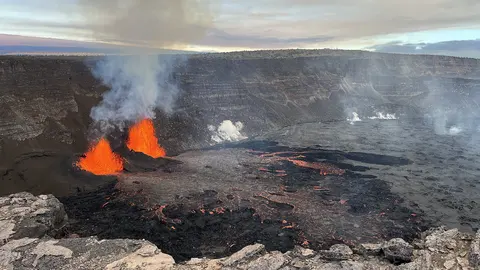
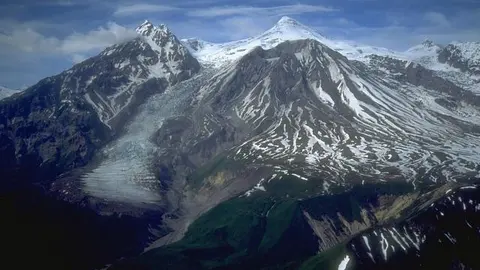
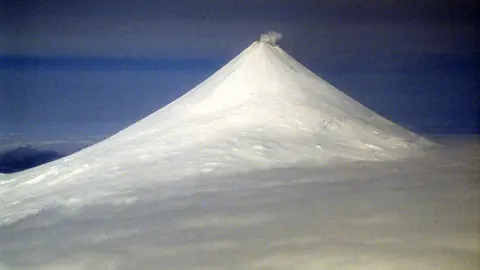
Photographs of each volcano come from Wikimedia Commons under free licences, and the author and licence are credited under every page where they appear. If you are the author of one of them and something is wrong with the credit, write to us and we will fix it the same week.
Mistakes and corrections
We get things wrong sometimes. A camera can be credited to the wrong operator, a date can be off, a description can no longer match what a cam shows. Write to info@naturelivecams.com and we will correct it, without fuss.
How we pay for it
The site is free to use. It carries advertising, which pays for the hosting and the time behind it. Ads never decide which cams are included or where they appear on a page, and we take no payment for listing a camera or a destination.
Using our pages
You are welcome to link to any page here, and to quote a sentence or two with a link back. The images belong to the cameras' owners, so ask them, not us, before reusing their pictures. The data we compile ourselves, such as which volcanoes are erupting or which have a clear view, may be quoted with a credit to Nature Live Cams.
Contact
Write to info@naturelivecams.com for anything: a camera to add, a correction, a licence question or a press enquiry. The contact page says what to include for each of those, and what we can and cannot do about a camera that is not ours. The legal details of the site are in the legal notice.