Italy volcano cams
Etna and Stromboli, two of the most active volcanoes in the world, and the volcanoes of the Bay of Naples, where millions of people live within reach of Vesuvius and Campi Flegrei.
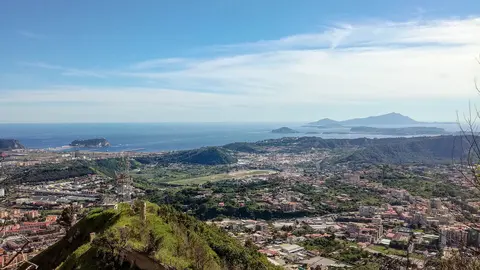
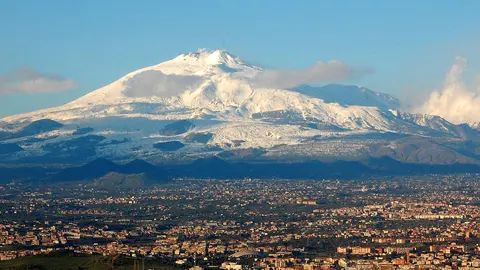
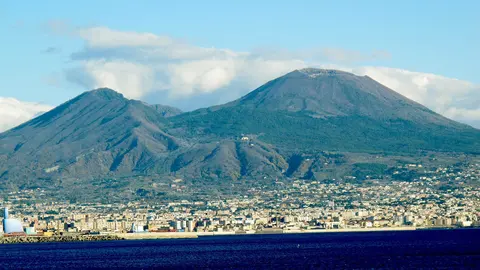
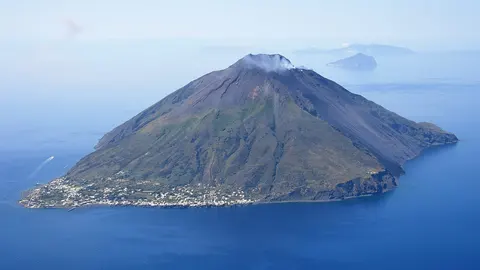
Photos: Mount Etna: BenAveling, CC BY-SA 4.0 · Stromboli: Carsten Steger, CC BY-SA 4.0 · Mount Vesuvius: pietro scerrato, CC BY 3.0 · Campi Flegrei: Baku, CC BY-SA 4.0.
Official streams from INGV
The Etna and Stromboli streams come from INGV, Italy's National Institute of Geophysics and Volcanology, which watches them from its Etna Observatory in Catania. Each official stream cycles between several surveillance cameras, including thermal ones, so the view changes every few seconds and a thermal frame can pick out hot material that the daylight cameras cannot see through fume. INGV publishes them under an open licence, CC BY 4.0.
Four volcanoes, four different problems
Etna is the largest active volcano in Europe, roughly 3,350 metres high — the figure changes every few years, because its summit craters build and collapse. Its eruptions are frequent and usually watchable from a safe distance, which is why it has become the most filmed volcano on earth.
Stromboli has been throwing out bursts of incandescent rock every few minutes for some two thousand years, steadily enough to have been called the lighthouse of the Mediterranean. The material falls back down the Sciara del Fuoco, the bare scar on its north-west flank.
Vesuvius last erupted in 1944 and has been quiet since, but it stands over one of the most densely populated volcanic areas anywhere. Campi Flegrei, just west of Naples, is not a mountain at all but a caldera partly under the sea; the ground there rises and falls by metres over the years, a slow movement known as bradyseism that lifts and floods the harbour of Pozzuoli by turns.
Best time to watch
Stromboli's explosions and Etna's lava fountains are most striking after dark. Italy is on Central European Time, one hour ahead of UTC in winter and two in summer. Winter brings snow to the upper slopes of Etna and the clearest air of the year; in summer, haze and Saharan dust often soften the view.