Spain volcano cams
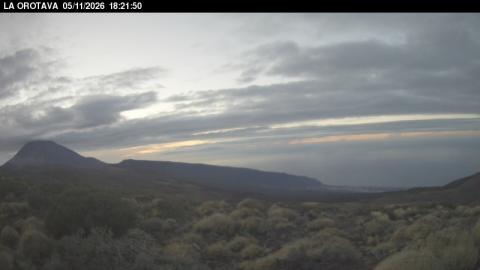
Spain's active volcanoes are in the Canary Islands, off the coast of Africa. This region brings together Teide, the highest mountain in Spain, and two cams on La Palma: Tajogaite, the volcano of 2021, and the Caldera de Taburiente.
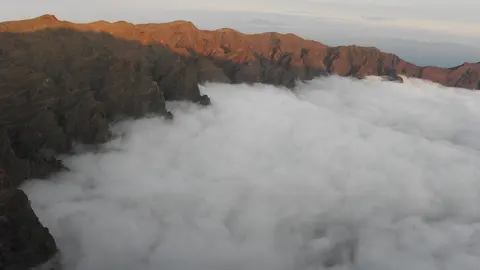
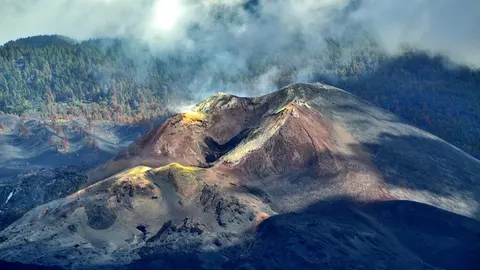
Photos: Tajogaite (Cumbre Vieja): Rolfcosar, CC BY-SA 4.0 · Caldera de Taburiente: Christoffer H. Støle, CC BY-SA 3.0.
Volcanic islands
All the Canary Islands are volcanic, built by eruptions over the last 20 million years. La Palma and El Hierro, the youngest, are also the most active: La Palma erupted in 1949, 1971 and 2021, and El Hierro had an underwater eruption in 2011 and 2012. The Spanish National Geographic Institute (IGN) and the Volcanological Institute of the Canary Islands (INVOLCAN) watch the islands around the clock.
Teide and the eruption of 2021
Teide reaches 3,715 metres, which makes it the highest point in Spain and the third-tallest volcano in the world measured from its base on the ocean floor. It has not erupted since 1909, and that eruption was on its flank, at Chinyero, rather than at the summit. The mountain sits inside a caldera 16 kilometres across, and the national park around it is among the most visited in Europe.
La Palma is the recent one. In September 2021 a fissure opened on the Cumbre Vieja ridge and kept erupting for 85 days, the longest eruption recorded on the island. The cone it built was named Tajogaite; its lava flows reached the sea and added new land to the coast, and the cameras now look out over ground that did not exist five years ago.
A sea of clouds
The trade winds often pile up a layer of cloud against the northern slopes of the islands, between about 1,000 and 1,800 m. The cams on Teide and on Roque de los Muchachos are above it, so they often show a sea of clouds below and a clear sky above. That same stable air is why the ridge at Roque de los Muchachos, at 2,426 metres, holds one of the largest collections of telescopes in the northern hemisphere.
Volcanoes on the mainland
The Iberian Peninsula also has old volcanic areas, such as the Garrotxa volcanic zone in Catalonia and the Campo de Calatrava in Castilla-La Mancha. We have not yet found public cams pointed at them; if you know one, tell us.
The Canary Islands follow Western European Time: UTC in winter and one hour ahead in summer.