Western US volcano cams
Seven volcanoes of the Cascade Range and the Yellowstone Caldera, watched by USGS and National Park Service cams. None of them is erupting, but St. Helens and Rainier are among the most closely monitored volcanoes in the United States.

What you can see
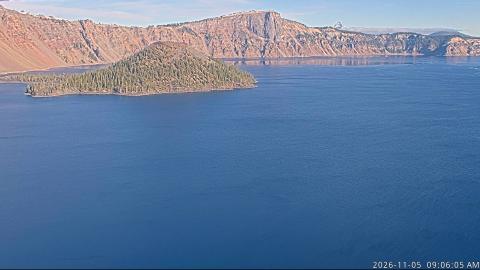
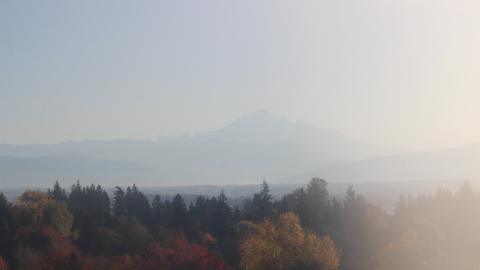
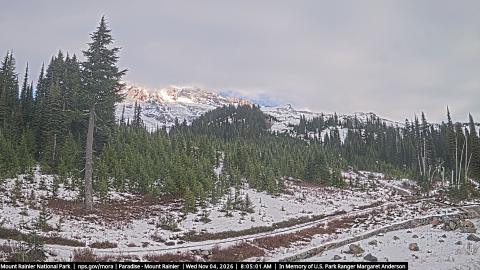
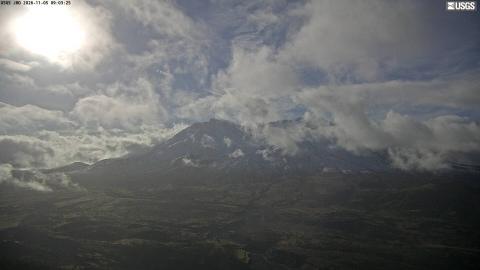
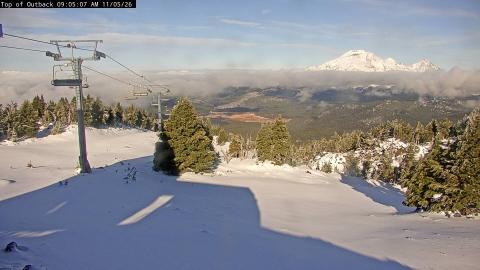
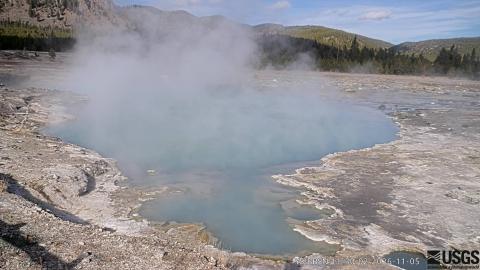
The Cascade cameras are aimed at the mountains themselves, from ridges and visitor centres several kilometres away, so the whole cone is in frame rather than just a crater. At St. Helens that means the open horseshoe left by 1980, with the dome sitting inside it. The Crater Lake cameras look across the water to Wizard Island, and the Yellowstone ones cover the hydrothermal basins, where the interest is in steam and geysers rather than in a summit.
A line of volcanoes from California to Canada
The Cascades run for a thousand kilometres and the cameras here follow them from south to north. Shasta, at 4,322 metres, stands alone above flat country in California and is the biggest of them by volume. Three Sisters, in central Oregon, is three separate volcanoes in a row, each of a different age. Hood is the highest point in Oregon and the one Portland looks at. Then come St. Helens and Rainier in Washington, and finally Baker, close enough to the Pacific to carry ten glaciers and to hold the world record for snowfall in a season.
Why they are watched so closely
Mount St. Helens erupted in 1980, in the deadliest and most destructive eruption in US history, and again from 2004 to 2008, when it grew a new lava dome. Mount Rainier worries scientists for a different reason: its glaciers could feed huge mudflows, called lahars, that would reach towns in the Puyallup River valley. Crater Lake fills the caldera left by the collapse of Mount Mazama about 7,700 years ago; at 594 metres it is the deepest lake in the United States, and it is filled entirely by rain and snow.
Yellowstone is a volcanic system rather than a single mountain. The cams here watch its hydrothermal areas, where steam explosions like the one at Biscuit Basin in July 2024 are a far more likely hazard than an eruption.
When to watch
The Cascades are on Pacific time, seven hours behind UTC in summer and eight in winter; Yellowstone is one hour ahead of that. Summer, from July to September, is by far the clearest season: the rest of the year the Pacific north-west is often under cloud, and low winter sun leaves the cameras in shadow for much of a short day. Snow closes the rim road at Crater Lake for a large part of the year, and the lake itself gets some of the heaviest snowfall in the country.