What you can see on the Kīlauea cams
The cams look into Halemaʻumaʻu, the crater inside Kīlauea’s summit caldera, from several points on its rim, and across the whole caldera. When lava is erupting they give the closest view anyone can get: the crater is closed to the public, and the nearest viewpoints in Hawaiʻi Volcanoes National Park are more than a kilometre away.
The lava flows from the south rim
From the south side of Halemaʻumaʻu, this livestream looks north over the vent area at close range. In the foreground lies a broad field of fresh, ropy lava; behind it the mound of tephra thrown out by the lava fountains, crusted yellow with sulphur, and beyond the caldera rim the forested land to the north.
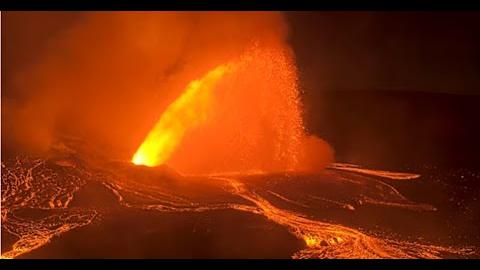
When the vents are active, this is the view that shows the most: glowing lava spilling out of the cone and branching across the crater floor in thin orange channels, with gas rising from the rim. Like the other two livestreams, it can be panned and zoomed.
Across the crater floor to Mauna Loa
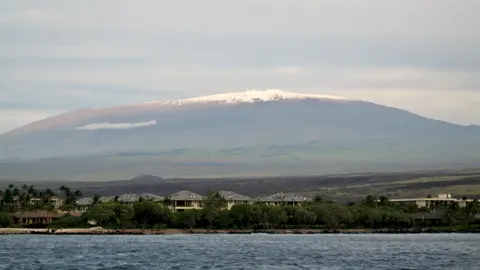
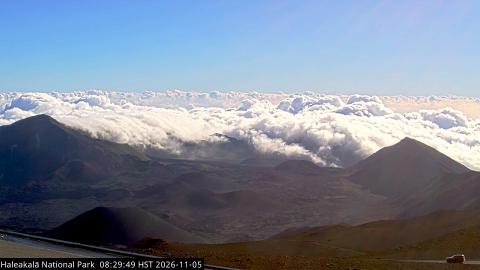
From the east rim of Halemaʻumaʻu, this livestream looks west across the crater floor to the vent area and the caldera walls beyond. The cone built by the recent eruptions rises in the middle, stained yellow by sulphur where gas seeps through it, and on clear days the huge, smooth shield of Mauna Loa fills the skyline behind.
The camera can be panned and zoomed by the observatory. In the morning the sun is behind it, which gives the flattest, clearest light of the day on the crater.
Zoomed in on the vents in Halemaʻumaʻu
The camera on the west rim of Halemaʻumaʻu can be turned and zoomed by the observatory, and it is often aimed close on the active vents on the crater floor. The overlay at the bottom right gives its pan and zoom settings, which shows when the framing has been changed.
Close up, the picture is soft from the heat shimmer and the distance, but it shows the details that the wide views miss: the small spatter cones built around the vents, the gas streaming off them and, when the vents are active, the glow of molten lava inside.
The whole summit caldera floor
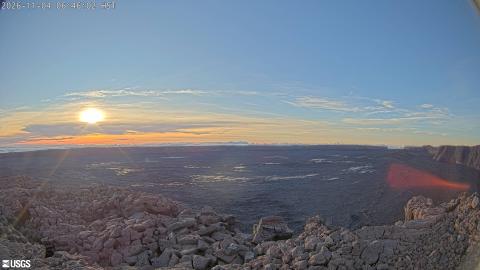
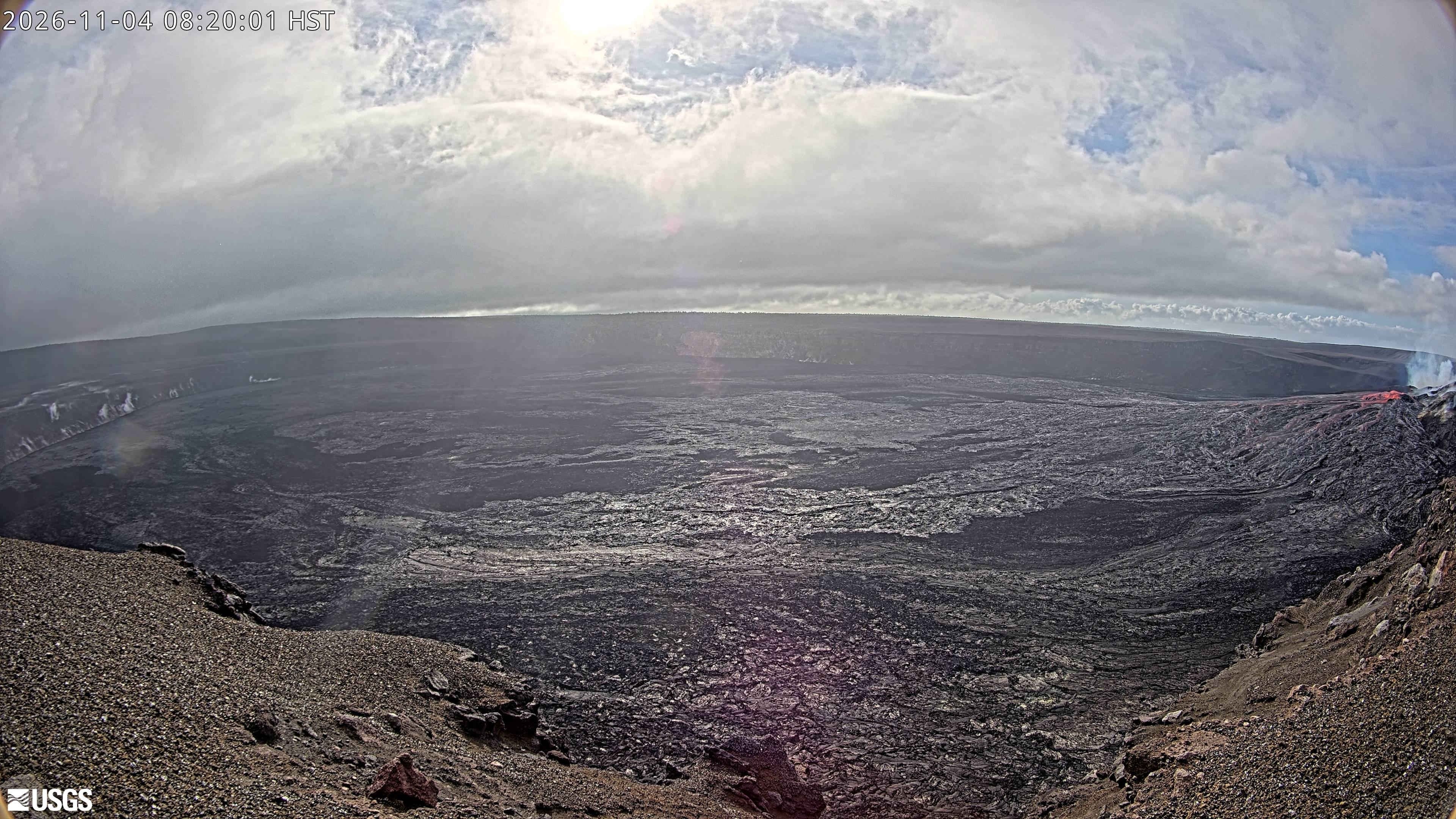
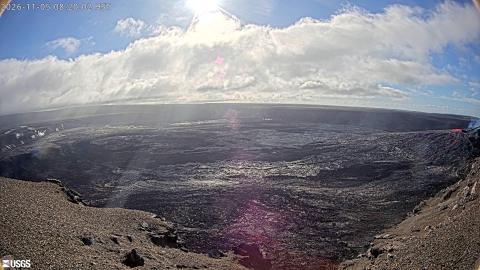
This wide, fisheye view from the west rim of Kīlauea's summit caldera takes in the whole floor at once: a plain of dark, glistening lava from the eruptions since 2020, ringed by the caldera walls, with the long, flat skyline of the volcano's flank behind. Steam rises from the crack zones along the edges, and the fresh flows show silver where they catch the sun.
It looks towards the morning sun, so the first hours bring glare and lens flare. From late morning the light is behind the camera and the textures of the lava come out.
Halemaʻumaʻu in heat, day and night
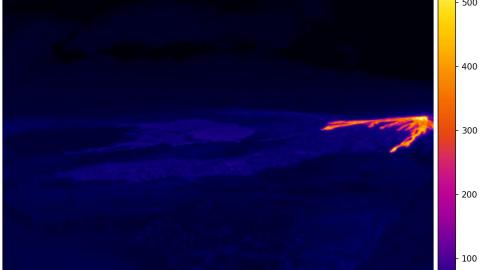
A thermal camera on the west rim, aimed across Halemaʻumaʻu, the crater inside the summit caldera. It records temperature rather than light: the colour bar on the right turns each shade into degrees Celsius, so cool rock shows dark blue and anything hot moves through purple and orange to white.
That makes it the most useful view when the others are blind. Through thick fume, low cloud or the dark of night, a vent that is glowing, a fresh flow cooling on the crater floor or a hot crack shows up at once as a bright streak or patch.
The summit eruption
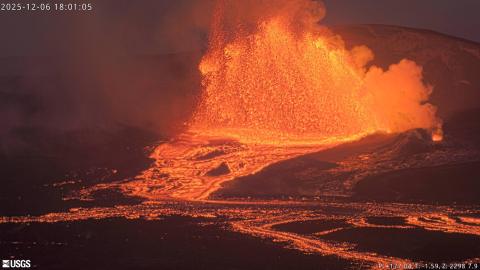
Since December 2024 the summit eruption has come in a long series of short episodes. Each one starts with lava spattering from vents in the southwest part of Halemaʻumaʻu and can build into fountains several hundred metres high, before stopping abruptly after hours or a day or so. Pauses between episodes usually last days. The USGS gives a time window for the next episode in its updates, linked from the activity box on this page.
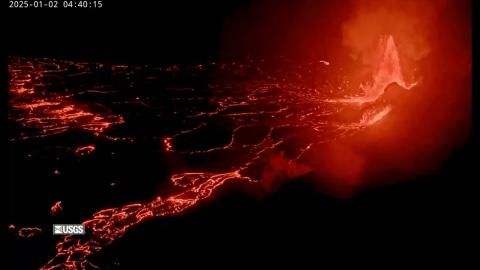
Between episodes the livestreams show a steaming crater floor, and the glow of cooling lava is often still visible at night.
When to watch Kīlauea
Fountains are spectacular at any hour, but the glow of the crater and the vents shows best in darkness. Hawaii is 10 hours behind UTC all year, so check the local time box before you settle in.
Visiting Kīlauea
Hawaiʻi Volcanoes National Park is open around the clock. During eruptive episodes the viewpoints along the caldera rim, such as Uēkahuna and Keanakākoʻi, fill up quickly. Volcanic gas and fine glass fibres known as Pele’s hair can drift downwind, so check the park’s alerts before you go.