
What you can see on the Great Sitkin cams
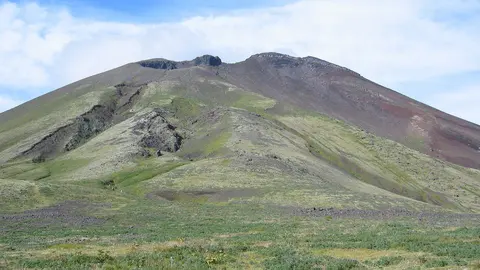
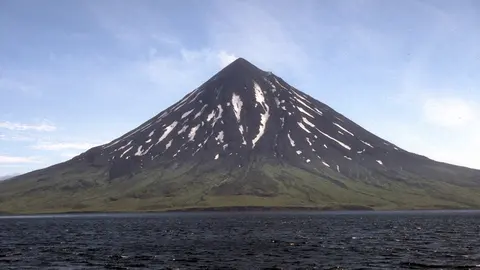
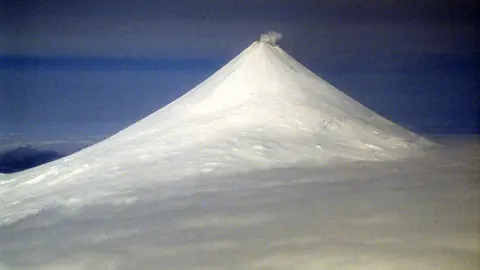
The cams show the volcano from a few kilometres to the south and from Adak Island across the water. Look for steam or ash above the summit; the slow lava flow itself rarely glows brightly enough to see.
A slow eruption
After a small explosion in May 2021, lava began to erupt in the summit crater in July of that year. It has oozed out ever since, piling up into a thick flow that filled the crater and spread down valleys on the volcano’s flanks. The lava moves too slowly to glow brightly on the cams, but satellite images show the flow growing month by month. Explosions are possible at any time, which is why the alert level has often stayed elevated.
When to watch Great Sitkin
As elsewhere in the Aleutians, clouds are the rule. Clear, calm days in late spring and early autumn give the best chances. Adak is on Hawaii-Aleutian time, one hour behind the rest of Alaska.
Around Great Sitkin
Adak, the nearest town, grew up around a naval air station and is the westernmost municipality in the United States. The islands around it belong to the Alaska Maritime National Wildlife Refuge, one of the most important seabird areas in the world, with colonies of puffins, murres and auklets. The only regular links are flights and ships.
Visiting Great Sitkin
Great Sitkin is one of the most remote volcanoes on this site. Adak can be reached by scheduled flights from Anchorage, but the volcano itself has no trails or services, and the Aleutian weather makes any trip uncertain.