What you can see on the Azuma cams
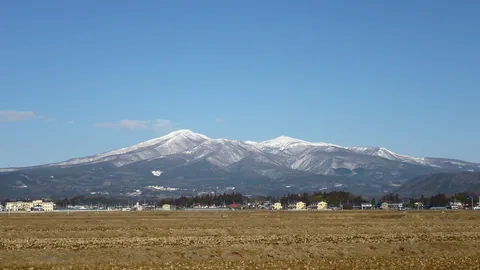
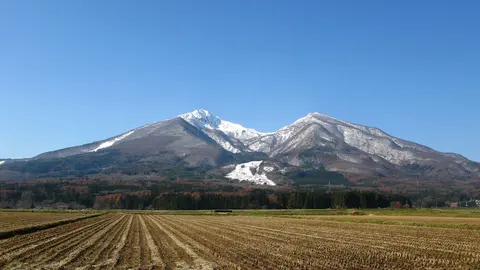
The restless side of Azuma is the bare, eroded flank of Issaikyō, grey and fawn rock streaked with gullies, where steam rises from the fumarole field. The size and direction of the plume are the simplest things to follow, and the steam shows best in cold, clear air. Mornings are usually the clearest, and in winter the mountain is white for months.
Steam above the bare flank of Issaikyō
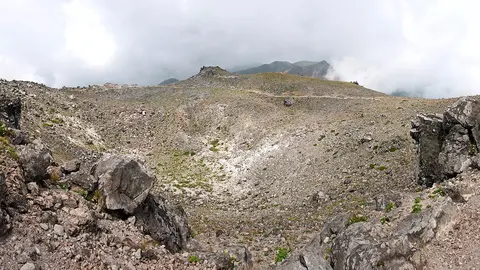
The camera looks across to a bare, eroded mountainside, close enough to show its texture: grey and fawn rock, streaked with pale gullies, rising to a broad, rounded top on the right. Lower on the left part of that flank is a vent from which steam rises and drifts off with the wind across the open sky. A low, dark ridge crosses the bottom of the frame.
This is the restless corner of the Azuma volcanoes, the fumarole field of Issaikyō, where the eruptions of modern times have broken out. The size and direction of the plume are the simplest things to follow from here.
Azuma-kofuji, the little Fuji
Azuma-kofuji means «Azuma's small Fuji», and the name is earned: a tidy cone with a deep crater at the top, which can be walked around in about half an hour. It is reached from the Bandai-Azuma Skyline, a mountain road that climbs past the fumaroles of Issaikyō. Every eruption recorded in modern times has come from that fumarole field rather than from the cone, and they have been small steam explosions. The volcanic group also holds several crater lakes, among them Goshikinuma, the «five-coloured marsh», whose water changes shade with the light and the season.
When to watch Azuma
Mornings are usually the clearest, before cloud gathers along the ridge. Autumn brings colour to the lower slopes, and winter the cleanest outlines. Japan is nine hours ahead of UTC, so the best light falls in the late evening in Europe and the early morning in the Americas.
Around Azuma
Fukushima city lies at the foot of the mountain, and the hot spring villages of Tsuchiyu and Takayu sit on the way up. The Skyline road is closed through the winter and reopens in spring, when it is cut between walls of snow.
Visiting Azuma
The crater walk at Azuma-kofuji is short and popular. The fumarole area of Issaikyō is restricted when gas levels rise or the alert level goes up, so the current status is worth checking before setting off.