What you can see on the Mount Nasu cams
Mount Nasu's views centre on Chausudake, a dome of bare, pale ash and rock sitting on top of slopes still green with scrub. Changes in steam or colour on its upper slopes are the things to watch. In autumn the scrub turns red, and cloud often banks against the lower ridges.
Bare ash slopes right under the active cone
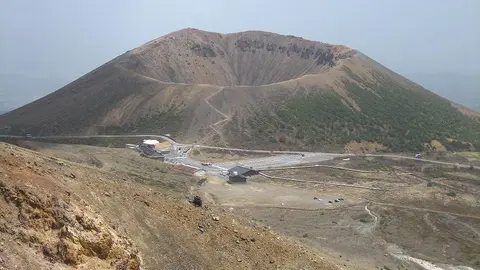
The closest of the Nasu views puts the active cone, Chausudake, right in front of the camera. Its slopes are bare grey ash and rock, cut by pale streaks and white patches, and a small structure stands on the summit. Low scrub, red in autumn, fills the foreground, and on the left the ground falls away towards lower ridges, often with cloud banked against them. The caption reads Nasu-dake (Hinode-daira north).
This is the view for watching the cone itself: any change in colour or steam on its slopes shows up here first. Chausudake last erupted in 1963.
The bare summit dome above green slopes
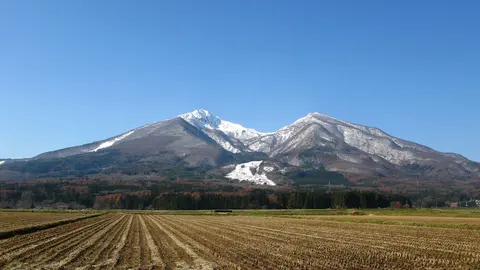
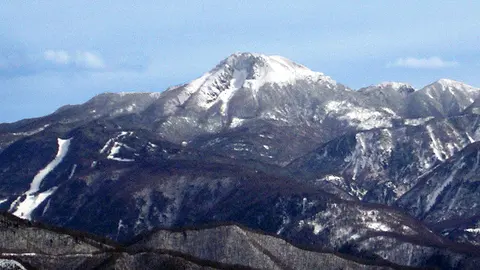
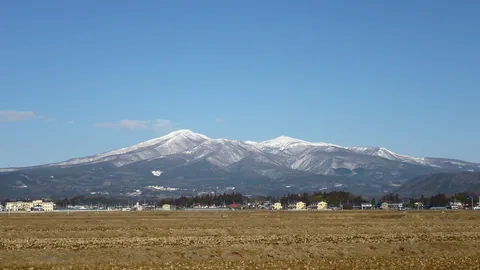
This camera looks up at the active cone of Mount Nasu from lower down the mountain, across a long slope of green scrub. The top stands out against the sky: a rounded dome of bare, pale rock, with whitish patches near the summit, above flanks that are still covered in vegetation. Treetops edge the bottom of the frame. The Japanese caption reads Nasu-dake (Yumoto 2), with the date and time on the right.
It is the wider of the two Nasu views, the one that shows how the bare cone of Chausudake sits on top of the range. Chausudake last erupted in 1963.
A thousand years of bathing, and a stone with a story
The hot springs below the mountain, Nasu Onsen, have been in use for well over a thousand years — the oldest of them, Shikanoyu, is said to have been found in the seventh century. On the slope above them lies the Sesshō-seki, the "killing stone", a rock that legend says holds the spirit of a nine-tailed fox and that kills anything approaching it; the prosaic explanation is volcanic gas seeping from the ground around it. The stone split in two in 2022, which made news well beyond Japan. Chausudake last erupted in 1963.
When to watch Mount Nasu
Japan is nine hours ahead of UTC all year. Autumn is the season here, with colour on the slopes from early October and the clearest air of the year. Winter brings strong wind and snow, and the ropeway closes; summer afternoons are often hazy, so mornings are better.
Around Mount Nasu
The Nasu highlands below the volcano are full of hot springs, farms and small museums, and there is an imperial villa with part of its grounds open to the public. The Sesshō-seki and the Nasu Yumoto springs are on the road up to the ropeway.
Visiting Mount Nasu
The ropeway climbs to 1,684 metres and the summit of Chausudake is about forty minutes above it on a stepped path. It is exposed and the wind can be severe; the ropeway stops running when it is. The area is busy in autumn and on summer weekends.