What you can see on the Ontake cam
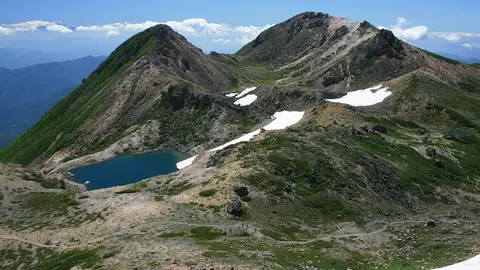
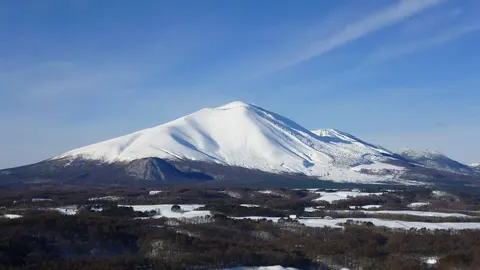
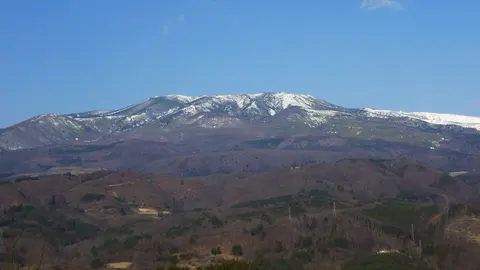
Ontake is wide rather than tall-looking: a broad summit massif of bare grey and brown rock above the treeline, which becomes a long white crest in winter. Steam from the summit craters often drifts above the ridge, most visibly when the air is still. Morning light warms the rock and gives the sharpest outline.
The broad summit ridge and its steaming craters
From Mitake Kurosawa, on the Nagano side, the camera looks up at the summit massif of Ontake, which spreads across the lower half of the frame. Bare grey and brown rock covers the upper slopes, lit warm in the morning, with a pale gully below the highest point and a small structure on the skyline. Steam from the summit craters often drifts above the left end of the ridge, and a forested slope cuts into the lower left corner.
Ontake, 3,067 m, is Japan's second highest volcano. Its eruption of 27 September 2014, a steam-driven blast with almost no warning, killed 58 people on the summit, and parts of the area have reopened only with restrictions.
27 September 2014
Just before midday on a Saturday in late September, with the autumn colours at their best and hundreds of walkers on the summit, Ontake erupted without warning. It was a phreatic eruption — groundwater flashing to steam, no magma reaching the surface — and it gave almost no seismic warning beforehand. Rocks were thrown across the summit area and ash buried the trails. Fifty-eight people were killed and five were never found, the deadliest volcanic disaster in Japan since 1926. The response changed how the country watches its volcanoes: the law was revised in 2015, monitoring was extended to more mountains, and shelters were built near the summit. Ontake has been a pilgrimage mountain for centuries, and the paths are still lined with thousands of memorial stones left by followers of the Ontake faith.
When to watch Ontake
Clear mornings from October to March give the sharpest outline. Summer afternoons usually cloud over. Japan is nine hours ahead of UTC.
Around Ontake
The Kiso valley, with the preserved post towns of Tsumago and Magome on the old Nakasendō road, lies to the east. Hot springs and ski slopes ring the lower mountain.
Visiting Ontake
Several routes climb from Nagano and Gifu, and parts of the summit area have reopened with helmets required and time limits in place. Restrictions change, so the current rules and alert level should be checked before going.