What you can see on the Mount Chōkai cam
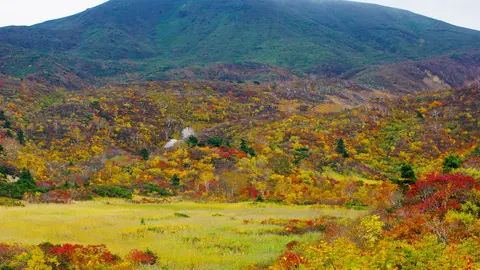
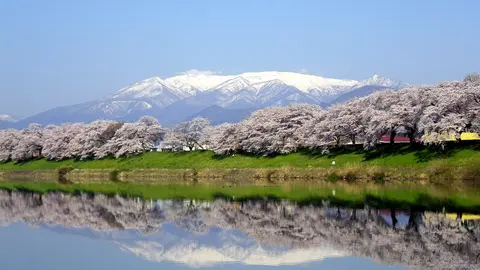
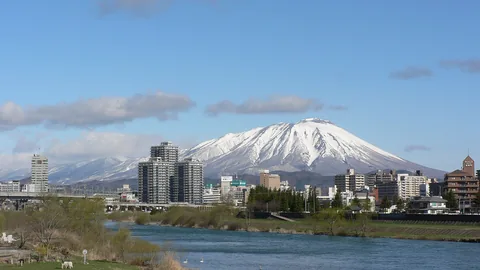
Chōkai is a mountain best taken in whole: one broad shape rising from the plain with no foothills in front, its snowfields lasting well into summer. Views of it are above all a reading of the weather — whether the summit is clear, where the cloud base sits, how far down the snow has come. Autumn and early mornings bring the clearest spells, while winter can hide the mountain for weeks.
The broad mountain across the plain
This is a long view across low, flat country to Mount Chōkai, which fills the lower half of the frame as one broad, gently rising mass with a flattened top. There are no foothills in between, so the mountain reads as a single shape from base to summit, the outline that earned it the name Dewa Fuji. The rest of the picture is sky.
At this distance it is above all a weather view: whether the summit is clear, where the cloud base sits, how far down the snow has come. Passing showers show as grey streaks in front of the slopes. Early morning is usually the clearest time.
Snow that comes back as water
Chōkai catches the wind off the Sea of Japan and takes an enormous amount of snow — enough that patches survive the summer on the north side. All of it soaks into porous volcanic rock and comes out again lower down as springs, hundreds of them, and those springs are why the plain below is good rice country and why the coastal town of Yuza is known for its water. The mountain's last eruption was in 1974, and before that an eruption in 1801 built the summit dome, Shinzan, killing several climbers.
When to watch Mount Chōkai
Japan is nine hours ahead of UTC all year. The clearest spells come in autumn, between the end of the rainy season and the first snows; winter brings weeks when the mountain simply is not visible. Early morning is usually the sharpest, before cloud builds against the slope.
Around Mount Chōkai
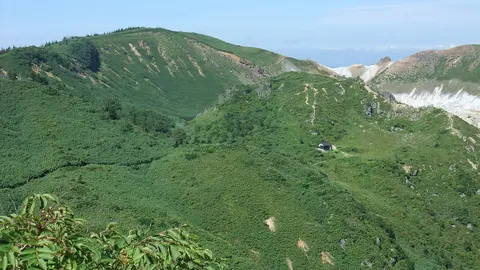
The Chōkai Blue Line crosses the mountain to 1,150 metres and is the usual way up for walkers. The Kisakata coast to the north was raised out of the sea by a landslide from the volcano in 1804, turning a bay of islets into rice fields with wooded mounds still standing in them.
Visiting Mount Chōkai
From the Blue Line the summit is a four-hour round trip on rock and snowfield; it is a serious mountain in poor weather despite the road. The Blue Line closes under snow from about November to late April.