
What you can see on the Taisetsuzan cams
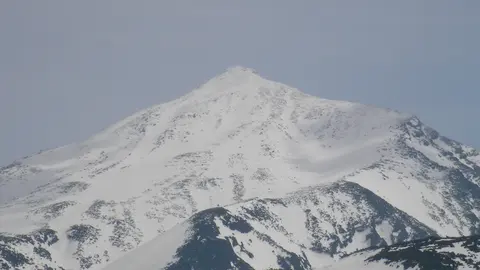
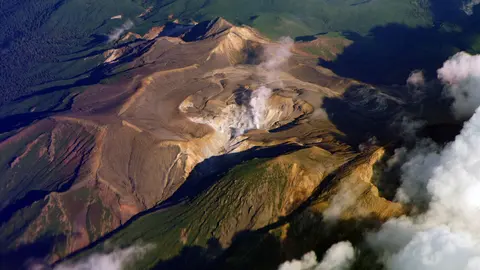
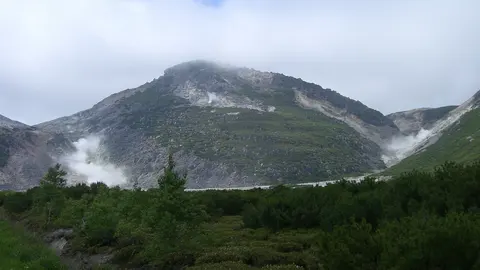
Taisetsuzan gives both the highest ground in Hokkaido on the skyline, which is a view for the weather, and the fumaroles on the flank of Asahidake, where steam comes out of the slope in several places at once. On a still morning the plumes stand straight up; in wind they lie flat. The snow comes early and leaves late, so the ground shows only from about June to October.
Where the Japanese winter starts
Taisetsuzan gets the first snowfall in Japan almost every year, usually in the second half of September, and the last patches are still there in July. That short summer is why the alpine flowers here are famous and why the autumn colour arrives in the second week of September, a month before anywhere else in the country. Asahidake's last eruption was around 1739; what it does now is steam, steadily, from the vents the camera watches.
When to watch Taisetsuzan
Japan is nine hours ahead of UTC all year. June to October is when the ground is clear and the fumaroles show best against rock rather than snow; from November the whole frame is white. Early morning is the most reliable, before cloud builds against the range.
Around Taisetsuzan
Asahidake Onsen sits at the foot of the ropeway with hot springs fed by the mountain. Sōunkyō, a gorge of columnar cliffs and waterfalls, is on the north-east side, and the park stretches far beyond both — most of it with no road at all.
Visiting Taisetsuzan
The ropeway climbs to Sugatami at 1,600 metres, where a level loop of about an hour passes the ponds and the fumaroles. The summit of Asahidake is another two hours up loose ash above that. Weather changes very fast here and the mountain is serious despite its modest height.