
Nature Live Cams

Taisetsuzan live cams

No recent report Stratovolcano in Hokkaido, Japan

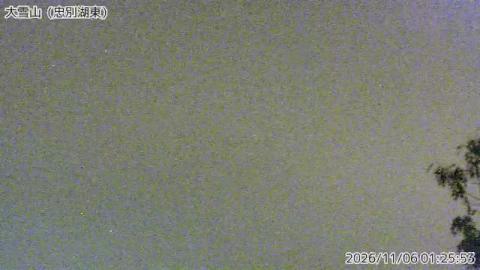
Live image of Taisetsuzan: Asahidake from Chūbetsu

Asahidake from Chūbetsu

Source: Japan Meteorological Agency (JMA)

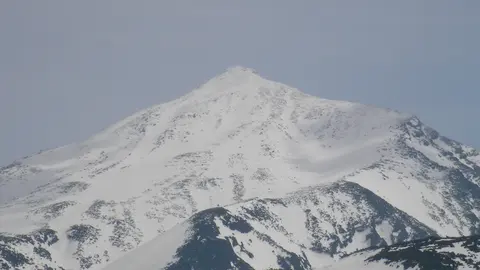
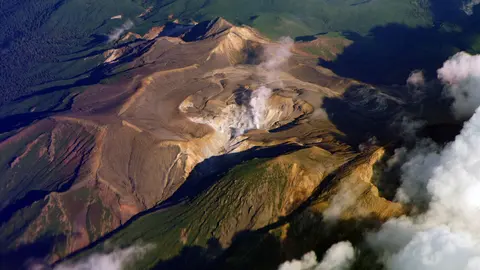
From the east, across the Chūbetsu valley, with the highest ground in Hokkaido on the skyline.

Taisetsuzan is not one mountain but a group of them in the middle of Hokkaido, and the highest, Asahidake, is at 2,291 metres the highest point on the island. The Ainu called the range Kamuy Mintar, the playground of the gods. The national park around it is the largest in Japan.

Taisetsuzan right now

Activity

No recent report

No automatic alert feed for this volcano. The observatory links below carry the latest reports.

Local time

–

Sunrise at 6:10 am, in 4 h 16 min.

Clouds over the summit

Overcast

100% cloud cover. Clearest in the next 24 hours: around 3:00 pm (17%).

At the summit

-4 °C (25 °F)

Wind 8 km/h (5 mph) from the SE.

Forecast model values for the summit area from MET Norway, updated 16:32 UTC. Not a measurement.

Is Taisetsuzan erupting right now?

No eruption reported. Nothing has been reported for it in recent weekly volcanic activity reports from the Smithsonian and USGS. Checked November 5, 16:32 UTC.

When did Taisetsuzan last erupt?

Last eruption: about 1739.

Earthquakes near Taisetsuzan

No earthquakes large enough to appear in the international catalogue have been recorded within 30 km (19 mi) of the summit in the last 30 days.

Source: EMSC. Updated November 5, 15:32 UTC. EMSC combines the catalogues of national seismic networks, but it mostly lists earthquakes large enough to be reported internationally; many small volcanic earthquakes are not included. Small earthquakes are common under active volcanoes and do not by themselves mean an eruption is coming.

What you can see on the Taisetsuzan cams

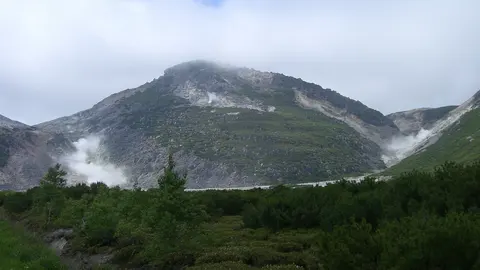
Taisetsuzan gives both the highest ground in Hokkaido on the skyline, which is a view for the weather, and the fumaroles on the flank of Asahidake, where steam comes out of the slope in several places at once. On a still morning the plumes stand straight up; in wind they lie flat. The snow comes early and leaves late, so the ground shows only from about June to October.

Where the Japanese winter starts

Taisetsuzan gets the first snowfall in Japan almost every year, usually in the second half of September, and the last patches are still there in July. That short summer is why the alpine flowers here are famous and why the autumn colour arrives in the second week of September, a month before anywhere else in the country. Asahidake's last eruption was around 1739; what it does now is steam, steadily, from the vents the camera watches.

When to watch Taisetsuzan

Japan is nine hours ahead of UTC all year. June to October is when the ground is clear and the fumaroles show best against rock rather than snow; from November the whole frame is white. Early morning is the most reliable, before cloud builds against the range.

Around Taisetsuzan

Asahidake Onsen sits at the foot of the ropeway with hot springs fed by the mountain. Sōunkyō, a gorge of columnar cliffs and waterfalls, is on the north-east side, and the park stretches far beyond both — most of it with no road at all.

Visiting Taisetsuzan

The ropeway climbs to Sugatami at 1,600 metres, where a level loop of about an hour passes the ponds and the fumaroles. The summit of Asahidake is another two hours up loose ash above that. Weather changes very fast here and the mountain is serious despite its modest height.
Volcano cams near Taisetsuzan

Taisetsuzan on the map

Mount Aso, Kumamoto, JapanAsoMount Fuji, Shizuoka and Yamanashi, JapanFujiMount Asama, Nagano and Gunma, JapanAsamaKirishima (Shinmoedake), Kagoshima and Miyazaki, JapanKirishimaKusatsu-Shirane, Gunma, JapanKusatsu-ShiraneMount Unzen, Nagasaki, JapanUnzenMount Tokachi, Hokkaido, JapanTokachiMount Iwate, Iwate, JapanIwateMount Hakkōda, Aomori, JapanHakkōdaMount Adatara, Fukushima, JapanAdataraMount Komagatake, Hokkaido, JapanKomagatakeMount Esan, Hokkaido, JapanEsanMount Zaō, Yamagata and Miyagi, JapanZaōMount Usu, Hokkaido, JapanUsuMount Bandai, Fukushima, JapanBandaiTaisetsuzan, Hokkaido, JapanTaisetsuzanKuttara, Hokkaido, JapanKuttaraAogashima, Izu Islands, Tokyo, JapanAogashimaMount Meakan, Hokkaido, JapanMeakanSatsuma-Iōjima, Kagoshima, JapanSatsuma-IōjimaAkita-Yakeyama, Akita, JapanAkita-YakeyamaAtosanupuri, Hokkaido, JapanAtosanupuriMount Chōkai, Akita and Yamagata, JapanChōkaiHachijōjima, Izu Islands, Tokyo, JapanHachijōjimaKuchinoerabujima, Kagoshima, JapanKuchinoerabujimaMount Kurikoma, Iwate, Miyagi and Akita, JapanKurikomaNakanoshima, Tokara Islands, Kagoshima, JapanNakanoshimaMount Nasu, Tochigi, JapanNasuMount Azuma, Fukushima, JapanAzumaMount Hakone, Kanagawa, JapanHakoneMount Haku, Ishikawa, JapanHakuMount Iwaki, Aomori, JapanIwakiIzu Ōshima, Tokyo, JapanIzu ŌshimaIzu-Tōbu, Shizuoka, JapanIzu-TōbuKōzushima, Tokyo, JapanKōzushimaMount Kujū, Oita, JapanKujūNiigata-Yakeyama, Niigata, JapanNiigata-YakeyamaNiijima, Tokyo, JapanNiijimaMount Nikkō-Shirane, Tochigi, JapanNikkō-ShiraneMount Norikura, Nagano, JapanNorikuraMount Ontake, Nagano, JapanOntakeMount Tarumae, Hokkaido, JapanTarumaeLake Towada, Aomori, JapanLake TowadaMount Tsurumi, Oita, JapanTsurumiSakurajima, Kagoshima, JapanSakurajimaSuwanosejima, Kagoshima (Tokara Islands), JapanSuwanosejima

More volcano cams in Japan